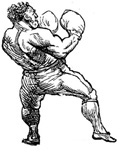
Who Really Killed Goliath?
A PILLAR OF COURAGE HIDING IN PLAIN SIGHT
The Old Testament is a divine embroidery that threads tales of history, folklore, and everyday life into a rich fabric. You can peel back the pages of 1 Samuel 17 and visualize a defiant youth, with boundless faith, slaying a giant named Goliath. In an epic battle, David calls his shot and tells Goliath, “You come to me with a sword and with a spear and with a javelin; but I come to you in the name of the Lord of hosts, and the Lord will deliver you into my hand, and I will strike you down, and cut off your head.”
Preachers across the nation inspire their congregations with homilies about David’s valor and exploits. In Sunday school and catechism classes, the Davidic tradition is passed down to youth who are like gems waiting to be theologically polished. I would argue that this rite of passage transcends the sanctuary and is a staple of American culture. Even Old Testament mythicists find a deep connection to the David-vs.-Goliath archetype because it’s a literary portrait that captures the human condition. We have all felt small, weak, and powerless when facing the figurative giants in our lives. The iconography of David slaying a giant is a metaphor for the underdog who stands in defiance of, and overcomes, seemingly insurmountable obstacles. David’s allegory of faith gives us hope like a seafaring ship steadied by unseen hands. As the storms of life thrash at the integrity of its timbers, the ship remains afloat.
But what if I told you there is a competing tradition in the Old Testament about an individual with a much lower profile who slayed Goliath? This man was a commoner, a servant with no royal pedigree. His biography is not associated with unflinching faith, and he is rarely cited in sermons or texts. Religious tradition has swept all trace of him from the chronicles of time. His existence is an echo unfulfilled, a faint whisper not heard.

You May Also Enjoy
Kreeft’s new autobiography is like a preface to his bibliography that helps decode how habits of thought, prayer, and questioning shaped everything that followed.
Look for one that explicitly reminds you of what St. Paul said was first in importance, Christ’s death, and for one that celebrates Communion frequently.
Scripture and Tradition testify that the order of this world ends in the chaos from which it was formed when the hand of God withdraws its providential order.