The Moral of the Story
IMAGINATION INTO BEHAVIOR
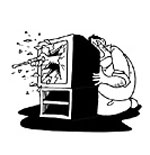
“Well, his parents let him watch it,” said our then nine-year-old, just denied permission to see a science-fiction movie she had heard about at school. The movie was from the Aliens series, which feature an alien monster that gestates inside a man’s chest before bursting through it. The parents to whose laxity she appealed were students studying at the nearby evangelical seminary where I worked.
Theirs was an extreme degree of parental laxity among the Christian parents I’ve known, but not an unusual one. I had always thought myself somewhat liberal in these matters, certainly compared with some of the parents I knew, whose attempts at controlling what their children read and saw were practically North Korean. But I have been stopped short by finding out that compared with some parents — and I am talking about serious, thoughtful Christians — I was Kim Jong Il, only better dressed.
A lot of adults believe that the stories told in books and movies are “only stories.” If they are Christians or cultural conservatives, they judge books and movies by certain moral standards, but they apply these standards to the presentation, not to the story itself. They think that if a book or a movie doesn’t have dirty words, graphic violence, occult practices, or sex scenes, it must be all right for their children to enjoy.
But it isn’t necessarily all right. The story affects a child more than its presentation. He might learn to swear from characters who swear, but he will probably not learn this lesson unless the story tells him that swearing is admirable — that it’s manly or tough, say, because the tough, manly hero swears. Of course, exposure to a lot of swearing will wear down many a child’s resistance to using such words (but not every child’s) by reducing his feeling of shock and by making swearing feel normal. But he will change his speech much more quickly if the story tells him that swearing is not only normal but good.


You May Also Enjoy
In movies today, it is not enough to show women as intelligent, savvy, and good; they have to portray men as stupid, witless, and irresponsible.
Free Speech Movement of the 1960s-era was about civil rights. Nowadays, it's about broadcasting the "s-word" and the "f-word."
Mary’s response to the angel’s message issued from the depths of her soul, bound her for all her days, and made salvation possible for mankind.