Soapboxes & Sedition: The Long, Uneasy History of Free Speech
COVENANT & CIVILIZATION
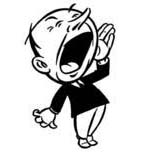
On October 14, 1855, a carpenter stood atop a soapbox in Hyde Park and complained about the price of bread. His speech was unremarkable but his setting revolutionary. That makeshift pulpit became the first act of what would later be known as Speakers’ Corner, the one spot in London where a man could rail against anything — the Crown, the clergy, or the price of mutton — and not be immediately dragged off by a constable.
George Orwell, who had a knack for noticing human absurdities, later called Speakers’ Corner “one of the minor wonders of the world.” There he listened to “Indian nationalists, temperance reformers, Communists, Trotskyists, the Socialist Party of Great Britain, the Catholic Evidence Society, freethinkers, vegetarians, Mormons, the Salvation Army, the Church Army, and a large variety of plain lunatics.” The British had done what they do best — turn public dissent into an orderly ritual.
The roots of Speakers’ Corner, however, are darker. Hyde Park once housed the infamous Tyburn gallows, where criminals were hanged before cheering crowds. Before dying, the condemned were granted the “right” to address the public, often cursing the state, the Church, or both. It was gruesome theater, but it set a precedent: In Britain, you could speak freely — provided you were about to die.
When the Chartists and the Reform League demanded true freedom of assembly in the 19th century, the government eventually relented, not out of love for liberty but out of fear of mobs. Thus, Speakers’ Corner was born, an officially sanctioned area where citizens could shout safely into the void. The British approach to free speech was always paternal: The people could talk so long as the Crown chose not to listen.
Contrast this with the United States, where free speech is not granted but guaranteed. The First Amendment was written precisely to forbid the state from deciding what people could or could not say. Thomas Jefferson wrote that “the basis of our governments being the opinion of the people, the very first object should be to keep that right.” James Madison added that “the censorial power is in the people over the government, and not in the government over the people.” The Framers saw speech not as a privilege of permission but as an instrument of accountability.
That’s what the fictional anchorman Will McAvoy in the television show The Newsroom fails to grasp when he scoffs that “there are plenty of countries that have freedom.” They do — but not this kind. Britain has “freedom” that vanishes when someone reads Leviticus aloud in public. Canada has “freedom” that dissolves the moment an opinion “offends.” France has “freedom” that requires you to apply for a permit before protesting the government. The difference is not in quantity but in kind: America’s freedom is God-given and pre-political. The others are leased from the state with terms subject to change.
I take this personally. I was born in Malaysia, a British Commonwealth nation. In 1948 Malaysia inherited from its colonial overseers the Sedition Act, a law so sweeping it allows imprisonment for anything deemed “seditious,” including “tending to bring into hatred or contempt” the government or the monarchy. No trial, no appeal, no humor allowed. I lived under that law. I watched people vanish for speaking their minds. I learned early on that speech is not free if it costs your freedom. I survived that law and will fight so my children never have to experience such injustice in their lifetime.
Western nations are now learning the same lesson in reverse. Canada has become the polite dystopia Orwell warned about. In 2017 its Parliament passed a bill that makes it a potential crime not to use a person’s preferred pronouns — compelling speech under threat of punishment. British street preachers have been arrested for quoting Scripture on homosexuality, as in the case of John Dunn in 2023, and charged for “causing alarm or distress.” The charges against Dunn were dropped only after two years of public outcry.
In Finland, Parliament member Päivi Räsänen faced trial in 2021 for citing the Bible on marriage. Her alleged crime? “Hate speech.” In Ireland in 2025, legislators proposed a law criminalizing the possession of “hateful material,” which could include memes saved on your phone. In Germany, political dissidents have been fined for online criticism of immigration policy. Even in Australia, Catholic Archbishop Julian Porteous was dragged before an anti-discrimination commission in 2015 for distributing a pamphlet that affirms traditional marriage.
Meanwhile, in supposedly “progressive” democracies, violent speech by activists and mobs is often excused as “protected expression,” while peaceful dissent by Christians or conservatives is labeled extremism. What began as laws to protect the vulnerable are now tools to punish the virtuous.
The irony is old. The French Revolution shouted “liberty” while silencing dissenters. The Soviet Union promised “equality” while criminalizing jokes. The modern Left claims “tolerance” while purging social-media platforms. Every ideology that seeks to purify speech eventually devours speech altogether. The appetite for control always outweighs the capacity for reason.
Freedom of speech is not a Western ornament — it is a biblical necessity. The prophets of Israel were not polite; they were public. Elijah mocked Ba’al’s prophets in front of the king. Jeremiah preached against idolatry and was thrown into a cistern. John the Baptist rebuked Herod’s adultery and was beheaded. Christ Himself spoke truth to religious and political power and was crucified. The Gospel cannot flourish in a world that suffocates speech; it was written by men willing to die for words.
St. Thomas Aquinas held that “it is natural to man to communicate his thoughts to others.” To suppress that is to wound his nature. Speech, in the Thomistic sense, is not mere noise — it is the expression of reason. If man is made in the image of the divine Logos, then to silence him is to censor that image.
This is what modern technocrats and progressivists cannot grasp. They see speech as a tool of power, not truth. To them, censorship is mercy, and disagreement violence. Their “hate speech” laws are little more than emotional speed limits, policed by bureaucrats who believe moral outrage is a substitute for argument.
The result is cultural infantilization. Universities once devoted to the pursuit of truth now produce “speech codes” that would make Soviet censors blush. Britain’s University of Cambridge recently disciplined students for calling women “ladies.” The European Union’s new Digital Services Act grants bureaucrats the power to fine tech companies billions for allowing undefined “disinformation.” Free speech is dying not in darkness but in fluorescent administrative light.
The American Founders understood that truth requires exposure, not insulation. That is why the First Amendment forbids Congress from “abridging the freedom of speech.” It assumes speech will be offensive, disruptive, and occasionally insane — but it insists speech must be protected precisely for that reason. Speech that offends no one requires no defense.
In a republic, speech is the instrument by which the governed remind the governors that they work for them. Strip that away, and you reduce citizens to consumers, and parliaments to platforms. The right to speak truth is the first right tyrants attack because it is the right that keeps all others alive.
Those who say “it could never happen here” should read history. It always happens here — slowly, politely, and with good intentions. The gallows of Tyburn were dismantled, but the impulse to hang heretics remains. Only the methods change. Today, reputations swing where bodies once did.
Free speech, then, must be cherished, not assumed. It must be practiced even when uncomfortable, and defended even when unpopular. Christians in particular must remember that silence is not charity, and civility no substitute for truth. The Apostles did not win souls by avoiding controversy. They preached publicly, and they suffered for it.
To speak boldly is, therefore, not rebellion but obedience — to the God who said, “Go, therefore, and teach all nations.” The Word became flesh, not a footnote. The Incarnation itself is divine speech, God’s eternal Logos echoing throughout human history.
The soapbox of Hyde Park was a timid rehearsal of that truth: man must speak if he is to remain free. The moment we let fear, comfort, or political correctness steal that voice, we are already back at Tyburn — watching, in silence, as freedom swings.
©2026 New Oxford Review. All Rights Reserved.
To submit a Letter to the Editor, click here.
You May Also Enjoy
A society that honors enterprise, private property, and moral restraint comes closer to the biblical vision of justice than any welfare bureaucracy ever will.
A 15-year-old in the 19th century carried more responsibilities than many of today’s 30-year-olds.
The Great Christmas Ceasefire of 1914 proves that the helpless Babe in Bethlehem rules as Lord even over the most advanced instruments of war.