From “Renovation” to Restoration
CHURCH ARCHITECTURE
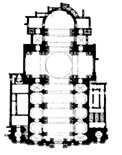
The modern church renovation movement has its root in the experimental churches of the 1940s and 1950s. Until that time, Catholic church architecture in the U.S. was predicated on the Catholic Counter-Reformation model of the 16th century. The artisans of those churches expressed their faith — an incarnational faith — by means of elaborate high altars and tabernacles, special niche and aisle shrines dedicated to the saints, prominent pulpits for preaching, abundant art in stained glass, sculpture, murals, and mosaics.
These churches were designed with transcendence in mind — bringing the heavenly Jerusalem down to us through the medium of the church building. These edifices taught the faith and helped form our Catholic consciousness.
The architectural experiments of the 1940s and 1950s discarded the Counter-Reformation model in favor of a modernist approach. The churches of previous centuries were deemed irrelevant by an elite corps of Church intellectuals and architects who would have greater influence in the years to come.
The post-war building boom in the U.S. saw the construction of many new churches, as parish rolls grew and the Church greatly increased in numbers. The churches built in this brief era were diverse in design, but many were obviously disconnected from the tradition of Catholic architecture, reflecting a more Protestant, or even secular, influence. This era produced hulking concrete edifices built in the form of conch shells, rocket ships, sail boats, origami figures, and circus tents.


You May Also Enjoy
Will's conservatism is one that works at "dusting off old ideas, not generating new ones." It does this out of the conviction that "after all, most new knowledge is false."
The Church and Abortion: A Catholic Dissent... Solzhenitsyn: A Soul in Exile (Revised and Updated)
Disgusting Junk... Denials, Omissions & Contradictions... Bitcoin: Failing the Fungibility & Morality Tests... Can’t You Hear Me Knocking?... and more