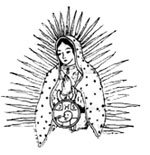
‘Mater Populi Fidelis’ & Titles Proper to Mary
ON DEVOTIONAL USAGE
Some years ago, when I was still an anti-Catholic Protestant, Marian titles such as “Co-Redemptrix” and “Mediatrix of All Graces” would have provoked outrage. They seemed to me then like a violation of the uniqueness of Christ’s redemptive work. For many Protestants, these expressions blur the line between worship owed to God alone and honor due the saints. With time, through a more disciplined study of Scripture and the writings of the early Church Fathers, I came to understand that Catholic use of these titles is theological shorthand for Mary’s subordinate and participatory role in the work of redemption. Even so, I recognize that such terminology can create obstacles for Christian unity. The new doctrinal note from the Dicastery for the Doctrine of the Faith (DDF), Mater Populi Fidelis, released this past November, addresses these concerns. It reaffirms devotion to the Blessed Virgin while clarifying its doctrinal boundaries.
The note opens by recalling that “the Mother of the Faithful People of God is viewed with affection and admiration by Christians because, since grace makes us like Christ, Mary is the most perfect expression of Christ’s action that transforms our humanity.” The tone is pastoral rather than defensive. The note observes that Marian titles such as Mediatrix, Mediatrix of All Graces, Co-Redemptrix, and Redemptrix have appeared frequently in popular devotions, in petitions for new dogmas, and in online movements. Concern arises when these titles are used without precision. Mater Populi Fidelis observes that such expressions “often sow confusion among ordinary members of the faithful” when they circulate without theological context. The aim of the DDF is to accompany and sustain Marian devotion within an authentic Christological and ecclesial framework.
The note identifies the fundamental question: “What is the meaning of Mary’s unique cooperation in the plan of salvation?” The Church has long taught that Mary’s “yes” at the Annunciation and her steadfast presence at Calvary represent a singular participation in Christ’s saving work. The title Mediatrix developed to express her maternal intercession for the faithful. The title Co-Redemptrix describes her intimate union with the Redeemer, particularly her participation in His suffering for the salvation of souls. St. Augustine referred to Mary as “cooperator in Christ’s Redemption,” underscoring both her cooperation with, and subordination to, Him. The DDF acknowledges these historical and devotional roots, recognizing that they arise from legitimate reflection on Scripture and the Church’s liturgical life.


You May Also Enjoy
The possibility of a child coming into being without the agency of a human father is no longer scientifically incredible.
For anyone who still harbors doubts about the authenticity of the third Fatima secret as revealed by the Vatican, Tarcisio Cardinal Bertone's book is a must read.
When sacrilegious art -- like a painting depicting the Virgin Mary wearing a G-string -- appears on a Catholic campus, what should be the proper response?