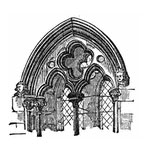
Choosing a Church
WHY NOT JOIN THE REAL THING?
In my account of becoming Catholic in The New Catholics (edited by Dan O’Neil) and in my Under the Mercy, I said, almost as an aside since it seemed obvious: “Choosing a church is not like choosing a suit or a house, a matter of taste and comfort. A little matter of truth.”
But it wasn’t obvious, even with the remark about truth. A number of readers wrote to me, asking innocently and plaintively, “Why isn’t it like choosing a house to live in?” What they were saying or implying was something like this: “If we all believe in the Risen Christ, what difference does it make whether we are Baptists or Episcopalians, Presbyterians or Catholics? Isn’t it just a matter of taste and comfort if we’re all Christians hoping for Heaven?” What was implicit in all the questions was the idea that the Catholic Church is just one of the multitude of “churches” or, more accurately, sects.
But a sect, the dictionary says, is “in religion: a party dissenting from an established or parent church.” The Catholic Church is the original Mother Church — not a sect. Not “a church,” but the Church.
Christ (Mt. 16) spoke of His Church — not churches. The creeds spoke of one holy catholic Church (catholic means universal). But if there is one holy universal Church, there can be no other churches.


You May Also Enjoy
An columnist was recently spreading a second-century heresy developed by Marcion, who taught that the God of the New Testament is wholly different from the God of the Old Testament.
It is high time the U.S. bishops together called us as a Church to a public act of repentance. I offer the following litany for such an occasion.
Prohibition, Persian Style... Church of St. Cinderella?... The Plaintiff Is a Monkey... Poetic Justice... Radical Grammatical Error... Singing ISIS to Sleep... Miniskirt Solidarity... Extreme Makeover, Concentration Camp Edition... Alternative Financial Aid... Saving Homeless Jesus... and more